Córdoba city
A caliphal, Jewish and Christian capital that is best explored on foot.
Key points
- Córdoba was a Roman colony, the capital of the caliphate (929–1031) and a city of Jews, Muslims and Christians. Its Historic Centre has been a World Heritage Site since 1984 (extended in 1994).
- Everything important lies within two kilometres: it is a walking city.
- Arrive by high-speed AVE train: from Madrid, Seville or Málaga, the station is a short walk from the centre.
- To eat, salmorejo, flamenquín and oxtail; to see, patios in May and Holy Week in spring.
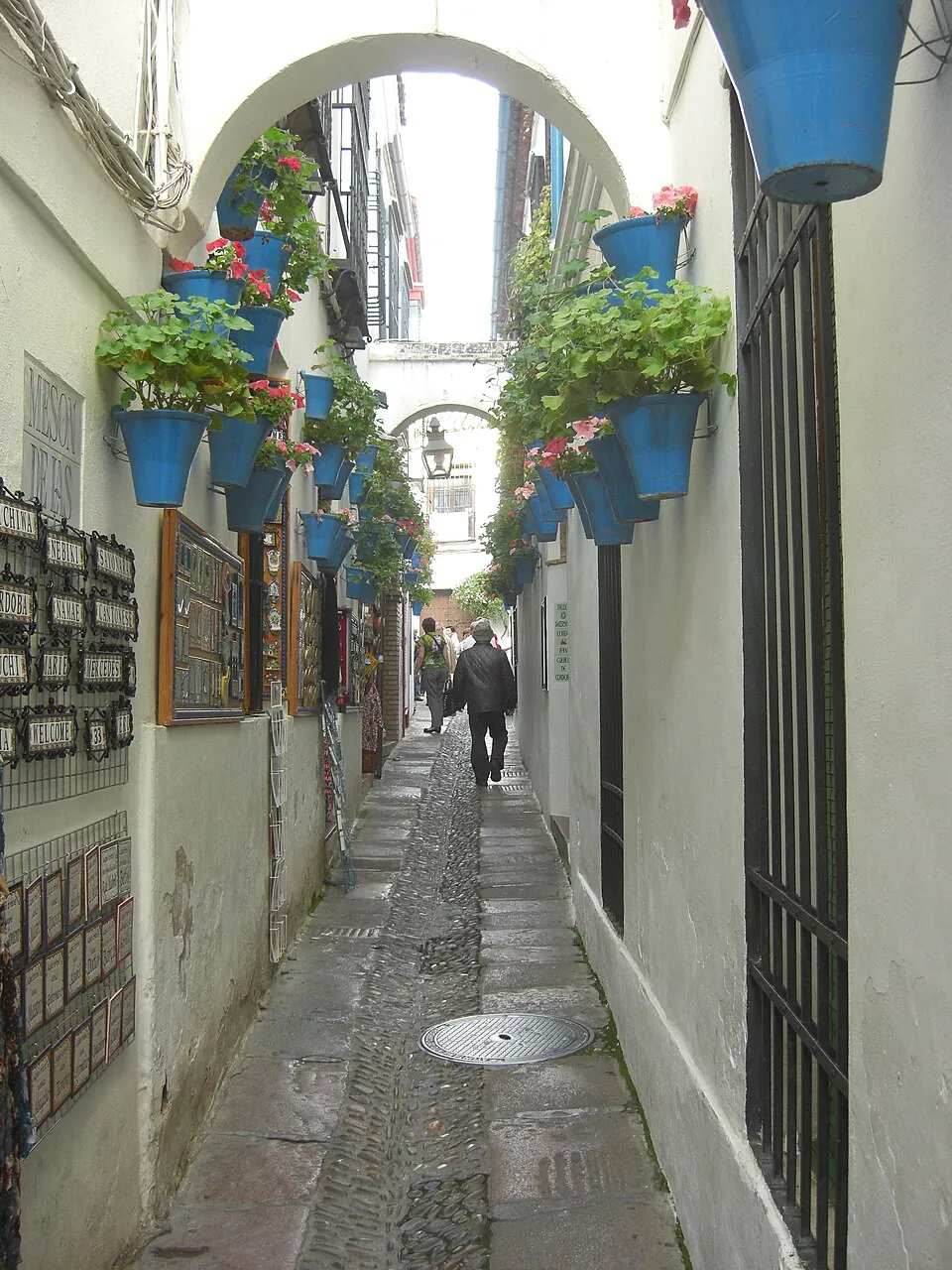
Mosque-Cathedral and Jewish Quarter
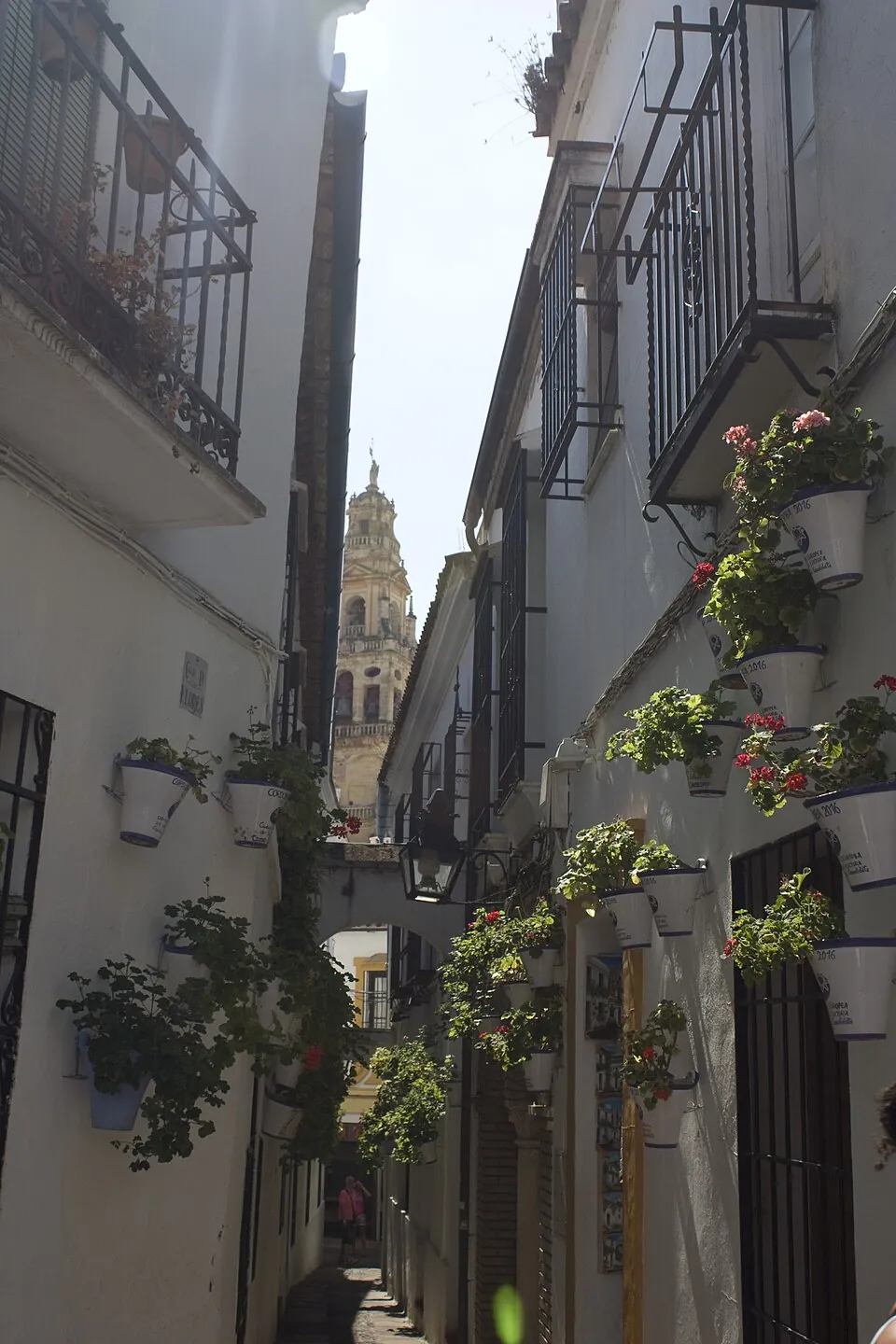
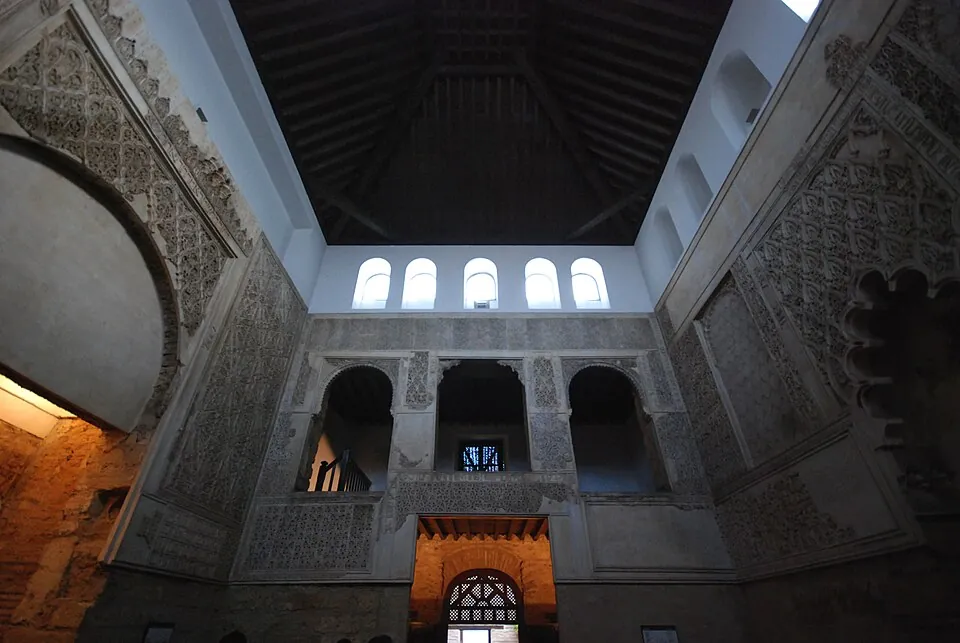
The Mosque-Cathedral is the must-see and is best booked in advance. Around it spreads the Jewish Quarter, with the Calleja de las Flores, the municipal crafts souk and the 14th-century synagogue, the only medieval synagogue preserved in Andalusia. Seneca, Averroes and Maimonides were born or lived in these streets.
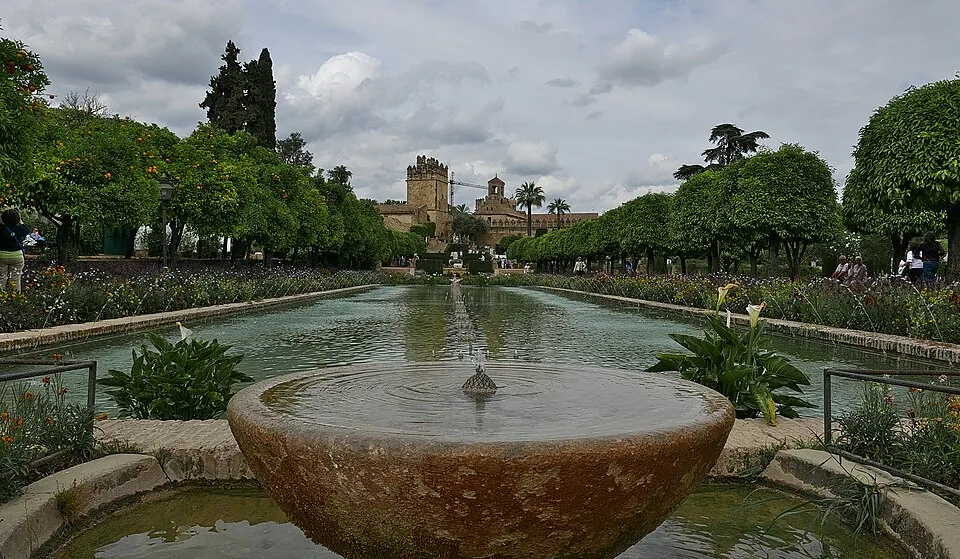
Alcázar, river and Roman Bridge
The Alcázar of the Christian Monarchs was a residence of the Catholic Monarchs and has gardens with ponds, Roman mosaics and towers with views. From there you reach in minutes the Roman Bridge, of Augustan origin and rebuilt over the centuries, the Calahorra Tower and the Albolafia waterwheel beside the Guadalquivir.
More to see in the city
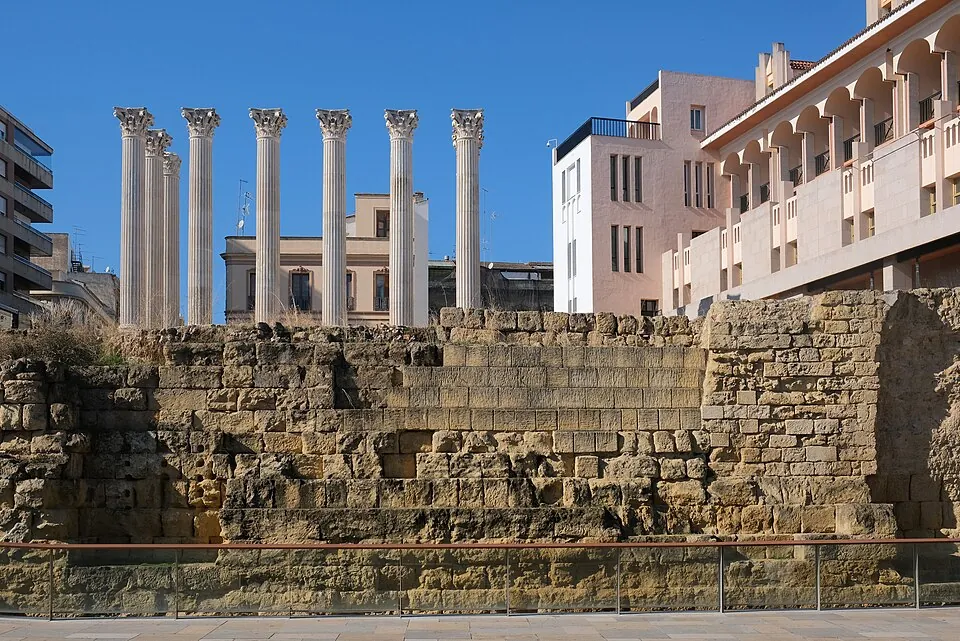
- Roman templeRemains of a 1st-century temple on Calle Claudio Marcelo, next to the Town Hall.
- Caliphal baths10th-century public baths with star-shaped vaults, near the Alcázar.
- Plaza de la CorrederaA 17th-century arcaded square with terraces and a market.
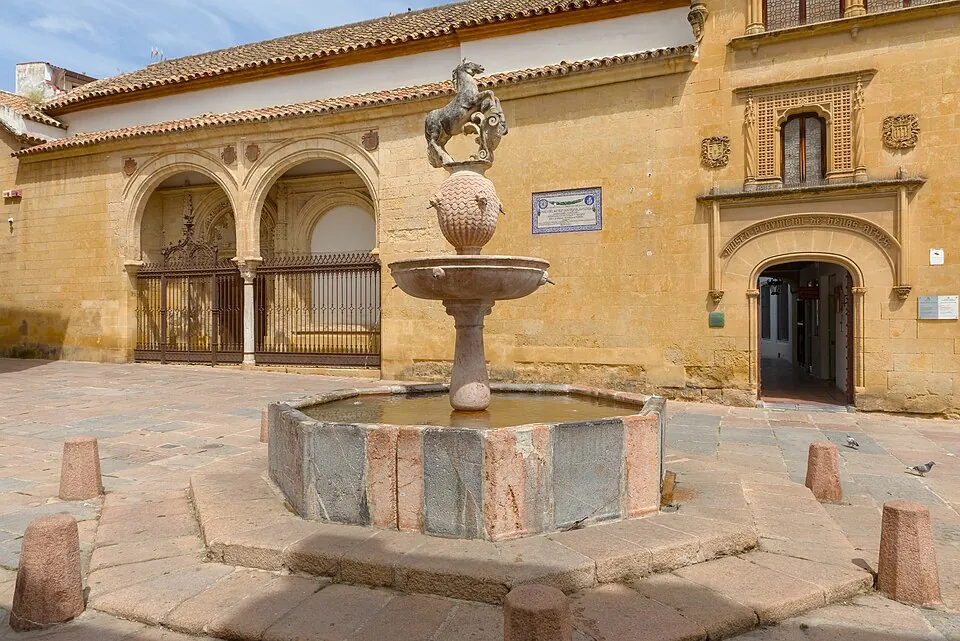
- Plaza del PotroA former inn mentioned by Cervantes; today it links to the Fine Arts Museum and the Julio Romero de Torres Museum.
- Viana PalaceA palace with twelve patios and a garden: the calmest way to get to know Córdoba's patios.
- Royal StablesFounded by Philip II for horse breeding, with equestrian shows.
Patios, flowers and festivals
Córdoba's patios are houses organised around an open space full of flowerpots. In May they compete in the Patios Festival; soon after comes the May Fair. Holy Week fills the old town with processional floats.
What to eat and where
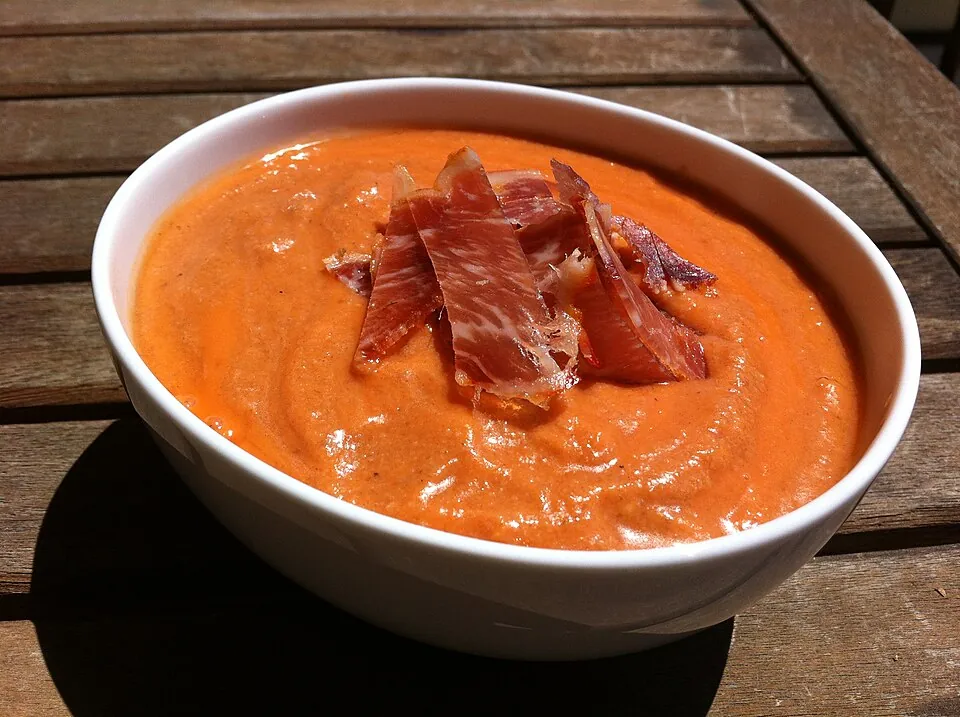
The city's cooking is best tried in the taverns and bars of the old town: salmorejo, flamenquín, oxtail stew, aubergines with cane honey and Córdoba pastry for dessert. For the full picture see the food and drink guide. The Victoria gastronomic market is a good stop for varied tapas.
Outside the old town: Medina Azahara
About 10 kilometres to the west, the caliphal city of Medina Azahara completes the historic visit. Allow half a day.
- Medina Azahara10 km
- Almodóvar del Río29 km
- Adamuz37 km
- Montoro44 km
- Montilla45 km
- Aguilar de la Frontera51 km
- Hornachuelos52 km
- Baena62 km
- Palma del Río66 km
- Lucena71 km
- Cabra72 km
- Zuheros75 km
- Pozoblanco77 km
- Peñarroya-Pueblonuevo76 km
- Priego de Córdoba94 km
- Iznájar107 km
Rounded figures by the most usual route (calculated with OpenStreetMap/OSRM); journey times depend on traffic and road type.
Frequently asked questions
Can Córdoba be seen in one day?
Yes: Mezquita-Cathedral in the morning, the Jewish Quarter and Calleja de las Flores at midday, the Alcázar and Roman bridge in the afternoon. Medina Azahara needs another half day.
Which area is best to stay in?
Around the Jewish Quarter and the Mezquita you can do everything on foot; the area near the high-speed train station is more practical if you arrive by rail.